
AICU honours Alphonse Kennedy, veteran Dalit activist from Karnataka
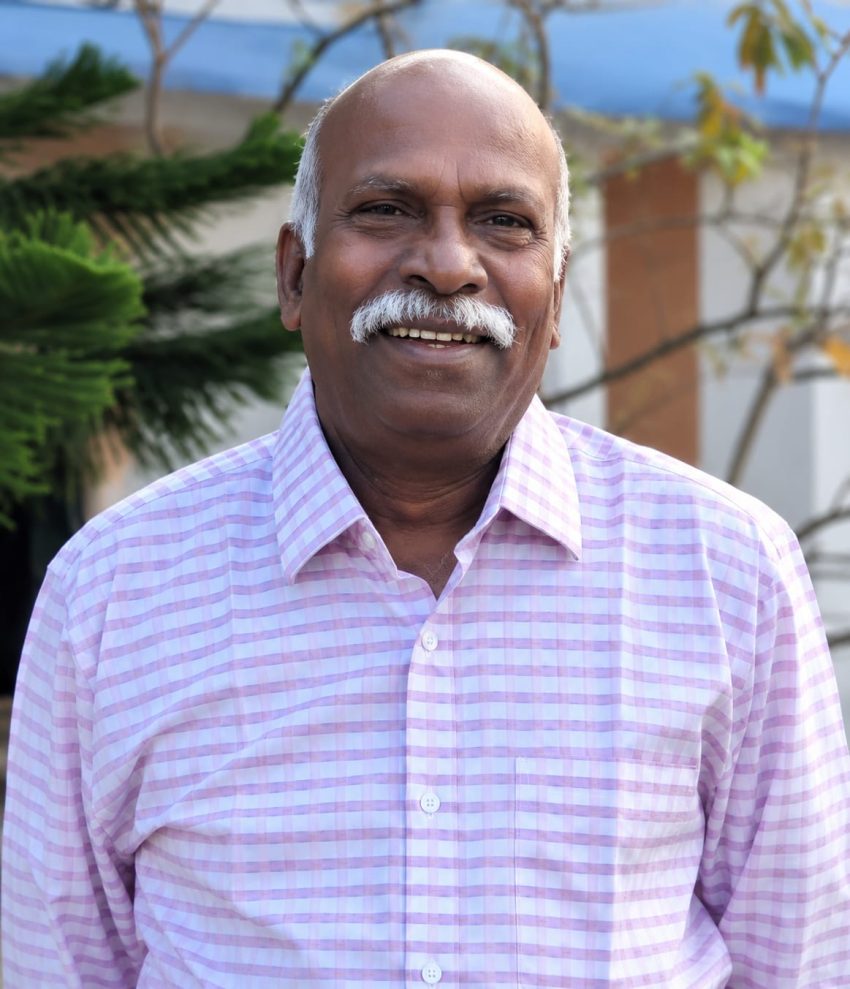
By Robancy A. Helen, India
The All-India Catholic Union (AICU), the oldest Catholic laity organization in South and Southeast Asia, honoured veteran Dalit activist Alphonse Kennedy of Karnataka for his longstanding contributions to Dalit emancipation, Dalit literature and culture, in particular, his work for the rights and dignity of Dalit Christians.
“I was surprised by this award. I see it as a recognition of my continuous involvement in Dalit emancipation, Dalit literature and culture, especially in the Dalit Christian movement,” Kennedy said.
The award also acknowledges his persistent efforts to raise Dalit and Dalit Christian concerns on the AICU platform. The AICU has played a pioneering role in advancing the issue of Dalit Christians since the 1950s.
For Kennedy, social activism is deeply rooted in his family background. Born into a family of activists, he developed an early interest in social action and justice movements.
As a young man, he was actively involved in the Young Christian Students (YCS) and Young Students Movement (YSM). In 1985, he served as one of the animators for an International Youth Meet held at Loyola College, Chennai.
He later participated actively in solidarity groups supporting various trade union struggles. He served as general secretary of the Christian Employees Coordination, an organisation that brought together Christian employees’ associations from public and private sector enterprises in and around Bengaluru.
Kennedy was also involved in the people’s movement in Kolar Gold Fields (KGF), helping to build solidarity around the struggle of workers and local communities affected by the closure of the gold mines.
During the late 1980s and 1990s, he served as a State Executive Member of the People’s Union for Civil Liberties (PUCL) and Citizens for Democracy.
Since 1990, Kennedy has participated in major Dalit Christian rallies in Delhi and other parts of India. He has also organised numerous symposia and seminars on Dalit Christian issues within Church institutions and across denominations.
In 1987, he became a founding member of the Karnataka Dalita Christara Vedike. He was subsequently a founding member of the Karnataka Dalit Christian Federation, an umbrella organisation bringing together Dalit Christian movements across Karnataka.
He currently serves as the secretary of the SC/ST Commission of the Karnataka Regional Catholic Bishops’ Conference and as national coordinator for Dalit Affairs of the All-India Catholic Union. He has also been nominated as president of the South Indian Dalit Catholic Association (SIDCA).
One of his significant contributions has been his role in advocating for the separation of religion from the caste column in Karnataka’s recently conducted socio-economic survey, undertaken after a gap of nearly 85 years by the Karnataka State Backward Classes Commission.
Kennedy’s commitment to social justice has received recognition on several occasions. He was honoured with the Dr. B. R. Ambedkar Award for his contribution to Dalit emancipation. The University of Mysore also recognised him with a citation for his presentation on “Religious Rights of Dalits.”
He is currently engaged in developing an exclusive curriculum on Appropriate and Integrated Rural Technology, reflecting his continuing commitment to empowering marginalised communities through knowledge and sustainable development.
For Kennedy, the award is not merely a personal honour. He sees it as a continuation of a struggle begun by his family.
“I dedicate this award to my parents, particularly my father, who was a freedom fighter and an activist. He initiated the Dalit Christian movement in Bengaluru,” Kennedy said.
“Whatever I am doing today is nothing but carrying forward the baton of his struggle for and with the marginalised. It was he who lit the spirit of activism in me at a very young age.”
He also dedicated the award to “all my toiling people whose blood and sweat are yet to receive their due value and dignity.”
For a veteran activist like Kennedy, the recognition is therefore more than an award. It is a tribute to decades of grassroots mobilisation and an affirmation that the struggle for equality, dignity and justice must continue.
Leave a Reply